Diving Into Japan's Year Ended March 31, 2026
A look into FY26 through the lens of eight Japanese game studios.

For the majority of Japanese video game companies, the fiscal year runs from April 1st to March 31st, which means every May offers us a chance to read across their financial statements and get a temperature check of the Japanese games market as a whole.
That's exactly what I've done. I picked eight companies – Bandai Namco, Capcom, Koei Tecmo, Konami, Nintendo, SEGA, Sony, and Square Enix – and dove through their earnings for the year ended March 31, 2026 (FY26).
Overall, the market is booming. We see a record-breaking hardware release that every publisher in the cohort is backing; remasters and remakes printing money at a level that gives publishers the freedom to take swings at new IP; and an aggressive expansion into television, film, and adjacent transmedia formats.
The market is also changing. PC has emerged as a dominant digital channel in an ecosystem that used to be PlayStation-first; the mobile gacha gold rush has decelerated; and titles are releasing day-and-date globally where consumers in the West used to wait months – or years – for Japanese games.
Below, I've compiled some of the biggest trends I see across the cohort.
1) The Switch 2 is a shot of adrenaline for a market already sprinting
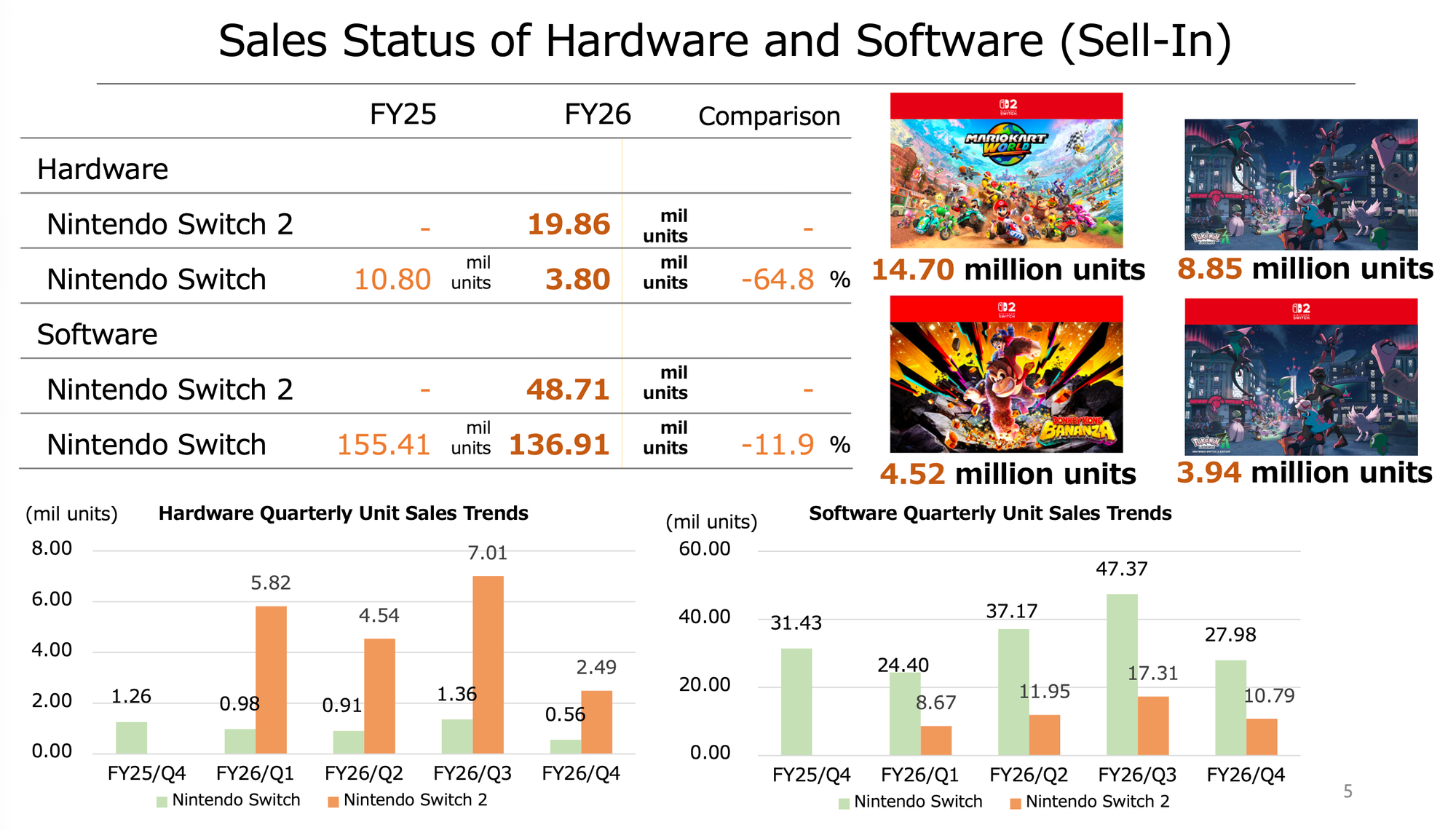
Switch 2 released in June 2025 and sold 19.86 million units in its first ten months, outselling the original Switch's first full year and unseating the PS4 as the fastest-selling console of all time in the United States. It moved 49 million software units, anchored by Mario Kart World at 14.7 million – a launch bigger than any single Switch 1 game across an entire fiscal year, ever. Donkey Kong Bananza added 4.5 million, Kirby Air Riders did 1.9 million inside a single quarter, and Pokémon Legends: Z-A executed the cross-generation play with 8.9 million units on the old Switch and another 3.9 million as a paid Switch 2 upgrade. Nintendo's annual playing-user count hit a staggering 129 million.
With Switch 2's install base set to clear 36 million by Spring 2027, Japanese publishers are all-in. Every publisher in this cohort shipped at least one Switch 2 SKU in FY26, including third-party system-sellers like Koei Tecmo's Hyrule Warriors: Age of Imprisonment and Pokémon Pokopia (the latter shipping 2.5 million copies in its first five weeks). Across investor briefings, Switch 2 is now the assumed third platform for every AAA SKU. The original Switch was already underpowered against PS4 and Xbox One at launch and had aged out of the AAA conversation almost entirely by 2025; Switch 2 closes that gap, allowing major titles like Final Fantasy VII: Rebirth to release in a quality state.
And with the next PlayStation and Xbox consoles in limbo due to memory shortages, the Switch 2's hardware should stay relevant far longer than its predecessor.
2) The Transmedia Industrial Complex is fully operational
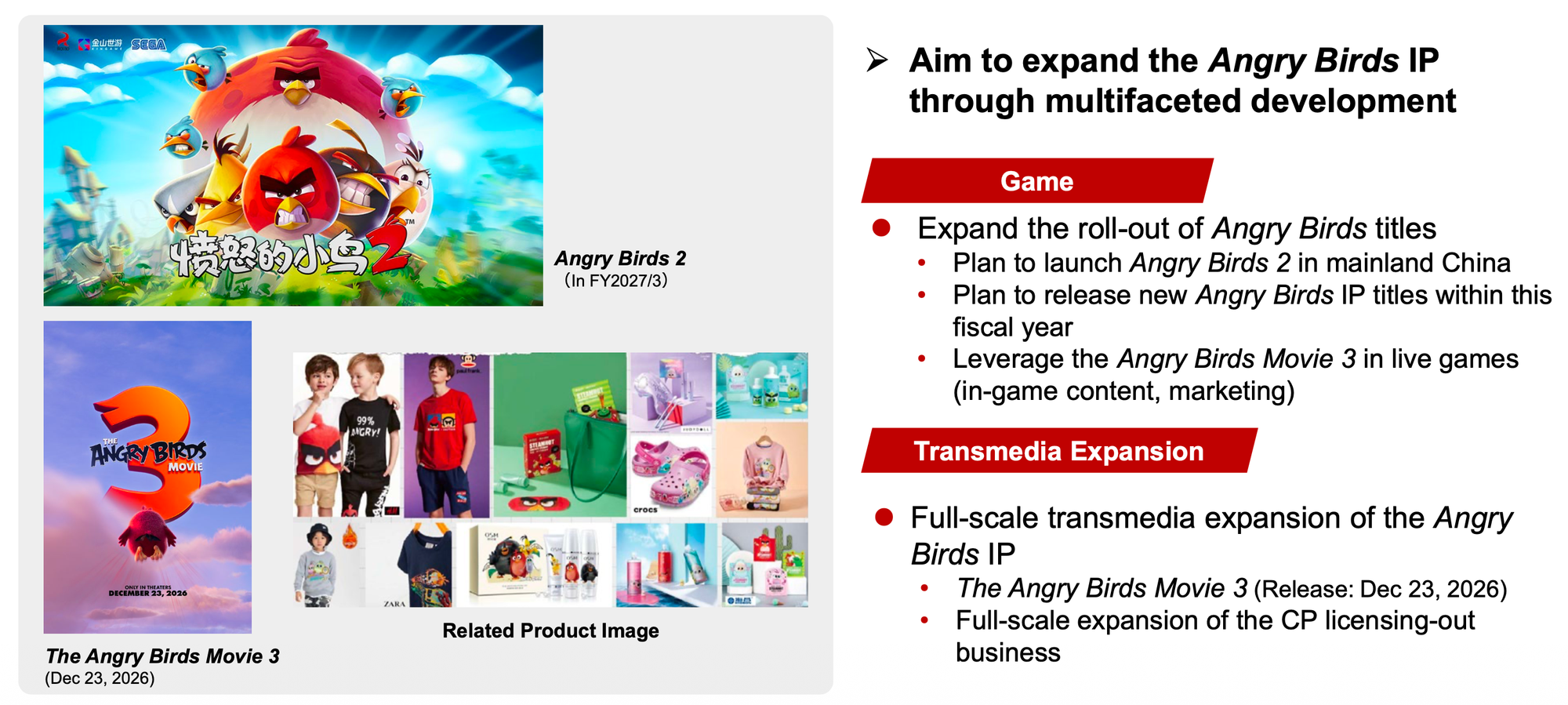
FY26 was the year Japan's transmedia industrial complex came fully online. Nintendo's Super Mario Galaxy Movie cleared $800 million worldwide in four weeks. Sony's Demon Slayer: Kimetsu no Yaiba became one of the year's highest-grossing films at $750 million+ globally. Capcom shipped a second season of its Devil May Cry animated series, with a live-action Street Fighter movie dated October 2026. Live-action adaptations for Bandai Namco's Gundam (starring Sydney Sweeney) and Elden Ring (directed by Alex Garland) were announced, and SEGA locked in FY27 release dates for The Angry Birds Movie 3 and Sonic the Hedgehog 4.
Bandai Namco's group revenue from Mobile Suit Gundam jumped from ¥153.5 billion to ¥254.3 billion in a single fiscal year – a 66% lift on a 45-year-old franchise, driven almost entirely by a new theatrical project – making Gundam the company's largest IP, bigger than Dragon Ball or One Piece. Sony's Music segment posted a record operating profit of ¥447 billion, up 25% year-on-year, which the company explicitly attributed to Demon Slayer. SEGA's filing called out the strength of its "transmedia expansion" and continuing revenue from the Sonic 1 (2020) and Sonic 2 (2022) films.
When one anime can move ¥100 billion of group revenue and one film can drive a record year at a music segment the size of Sony's, the value proposition for once-niche properties has enough transmedia potential to become a cornerstone of long-term strategy – and we're seeing the play implemented across the board.
3) From games that won't stop selling, to remakes and remasters, the back-catalogue is thriving
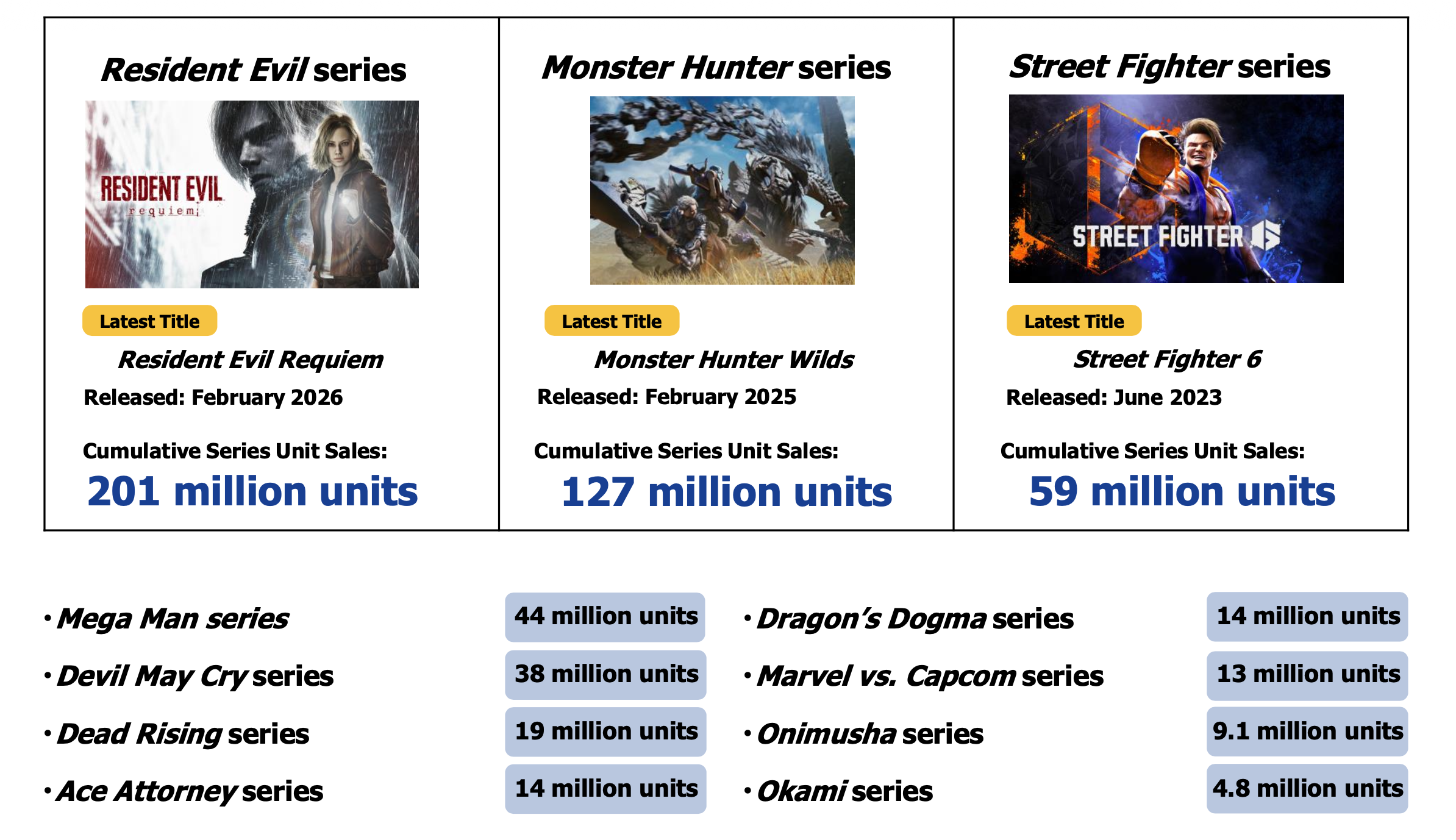
Mario Kart 8 Deluxe sold 2.88 million units in FY26, crossing 71 million lifetime in its ninth year on the market. Capcom sold 59.07 million game units in FY26; of those, 49.46 million (84%) were sales of previously-released games – a back-catalogue sales volume that grew 25% year-on-year. The biggest single-title performer from that catalogue was Resident Evil 4 Remake with 3.7 million additional units sold, with Resident Evil Village adding another 3.6 million. Across Resident Evil, Devil May Cry, Street Fighter, and Monster Hunter, six more titles each moved more than 2 million units in FY26 – a year when none of them launched.
FY26 was also the most concentrated remake-and-remaster year in Japanese gaming's modern history. Konami's Metal Gear Solid Δ: Snake Eater shipped 2 million+ units. SEGA shipped Persona 3 Reload in October, Yakuza Kiwami 3 in February, and RAIDOU Remastered in June. Koei Tecmo's Ninja Gaiden 2 Black landed, and Xenoblade Chronicles X: Definitive Edition followed. Square Enix's HD-2D remake program continued mining Dragon Quest and Romancing SaGa. The FY27 outlook does not slow down on the remakes, either.
This is the value of sustaining legacy IP. Just look at Capcom, which has now posted its thirteenth consecutive year of operating-profit growth – the longest streak in the Japanese games industry, and one of the longest anywhere in the world. Across those thirteen years, Capcom has released a steady cadence of critically-acclaimed titles from its major franchises – mixed between new entries and remakes – that continue performing year-over-year, creating a compounding-success loop where the pressure on new releases is buffered by legacy IP. That cushion allows Capcom to take bigger risks on fresh IP like Pragmata and Kunitsu-Gami.
And don't forget – in FY26, Capcom released Resident Evil Requiem to 6.91 million units, and Nintendo released Mario Kart World to 14.7 million units, and neither of these were cannibalized by the performance of the back catalogue.
4) PC has overtaken console as the dominant digital channel for several Japanese publishers
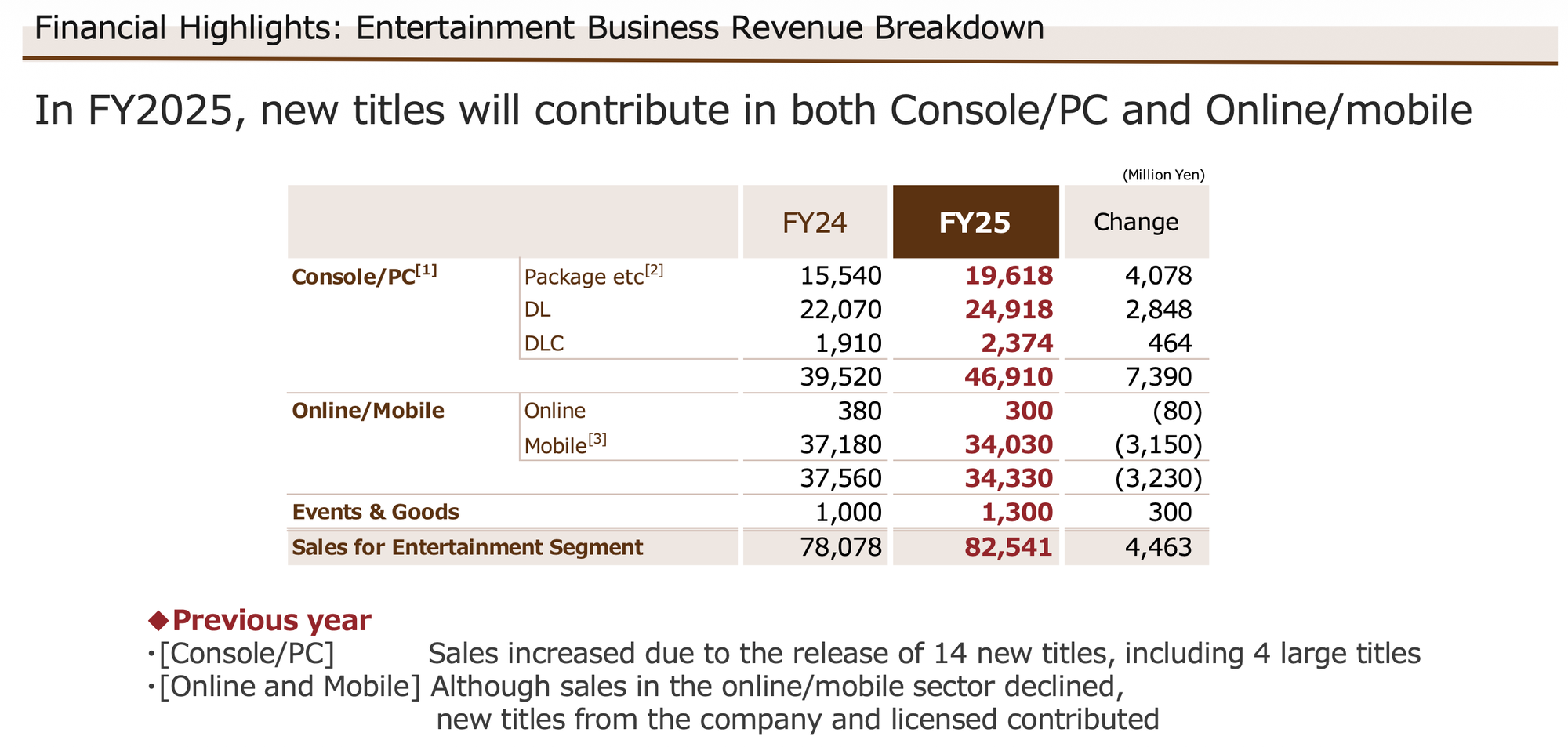
Of Capcom's 59.07 million game units sold in FY26, 93% of them were digital. PC alone accounted for 54.5% of all units sold, with console digital at 38.5% and physical down to just 7%. Capcom shipped roughly 32 million units on PC in a single fiscal year, an inversion of the console-first retail model that defined Japanese AAA economics even just a few years ago.
The same pattern is everywhere across the cohort. Koei Tecmo's international unit sales grew 111% in North America and 146% in Europe, concentrated on PC and current-gen console SKUs. Square Enix has formally moved to day-one PC releases for Dragon Quest III HD-2D Remake, Life is Strange: Reunion, and others. Bandai Namco shipped Elden Ring Nightreign on PC at launch. SEGA's Total War franchise has been PC-led for years. Even Konami lists PC alongside console for Silent Hill: Townfall and Metal Gear Solid Master Collection Vol. 2.
PC has become the single largest digital sales channel for several of the cohort's most profitable publishers, diversifying a historically PlayStation-first ecosystem. Distribution risk has dropped, gross margins on PC are higher than physical or even console digital, and the audience is structurally global. For a Japanese publisher in 2026, the question of shipping day-and-date on PC is no longer a question.
5) Japanese publishers are some of the most profitable AAA game makers on the planet
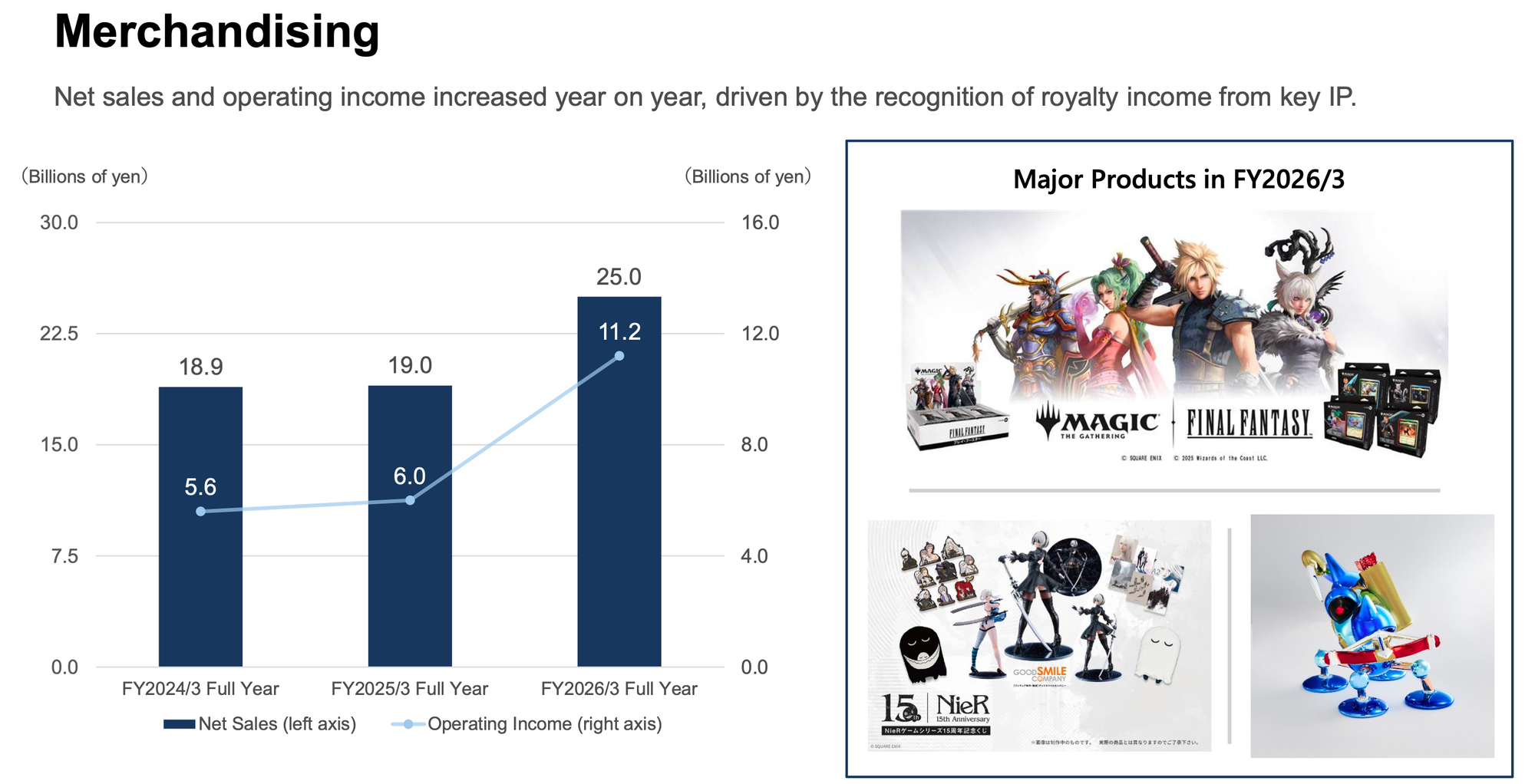
Across the eight companies in this analysis, the median FY26 operating margin was approximately 17%. Koei Tecmo leads at 42.0%, followed by Capcom (38.5%), Konami (27.5%), Square Enix (18.4%), Nintendo (15.6%, compressed by launch-year hardware mix), Bandai Namco (14.1%), SEGA SAMMY (9.7%), and Sony's Game & Network Services (9.9%, or closer to 12% with the Bungie impairment stripped out). For context, Electronic Arts ran in the high teens in its most recent fiscal year; Take-Two has dropped well below that ahead of Grand Theft Auto VI (to be expected); Ubisoft has spent the last few years in mid-single digits.
Three forces compound the gap. First, Japanese publishers ship more often based on IPs they fully own, and that ownership extends across media – plastic models, anime, mobile, licensing, and amusement. Second, the back-catalogue performance covered earlier means digital margins compound year after year on the same titles. Third, marketing-to-revenue ratios at the highest-margin publishers are dramatically below Western peers. Capcom has consistently kept marketing and promotion below 10% of revenue, against Western majors often above 15%.
6) The impact of memory costs and tariffs are real, and will continue into FY27
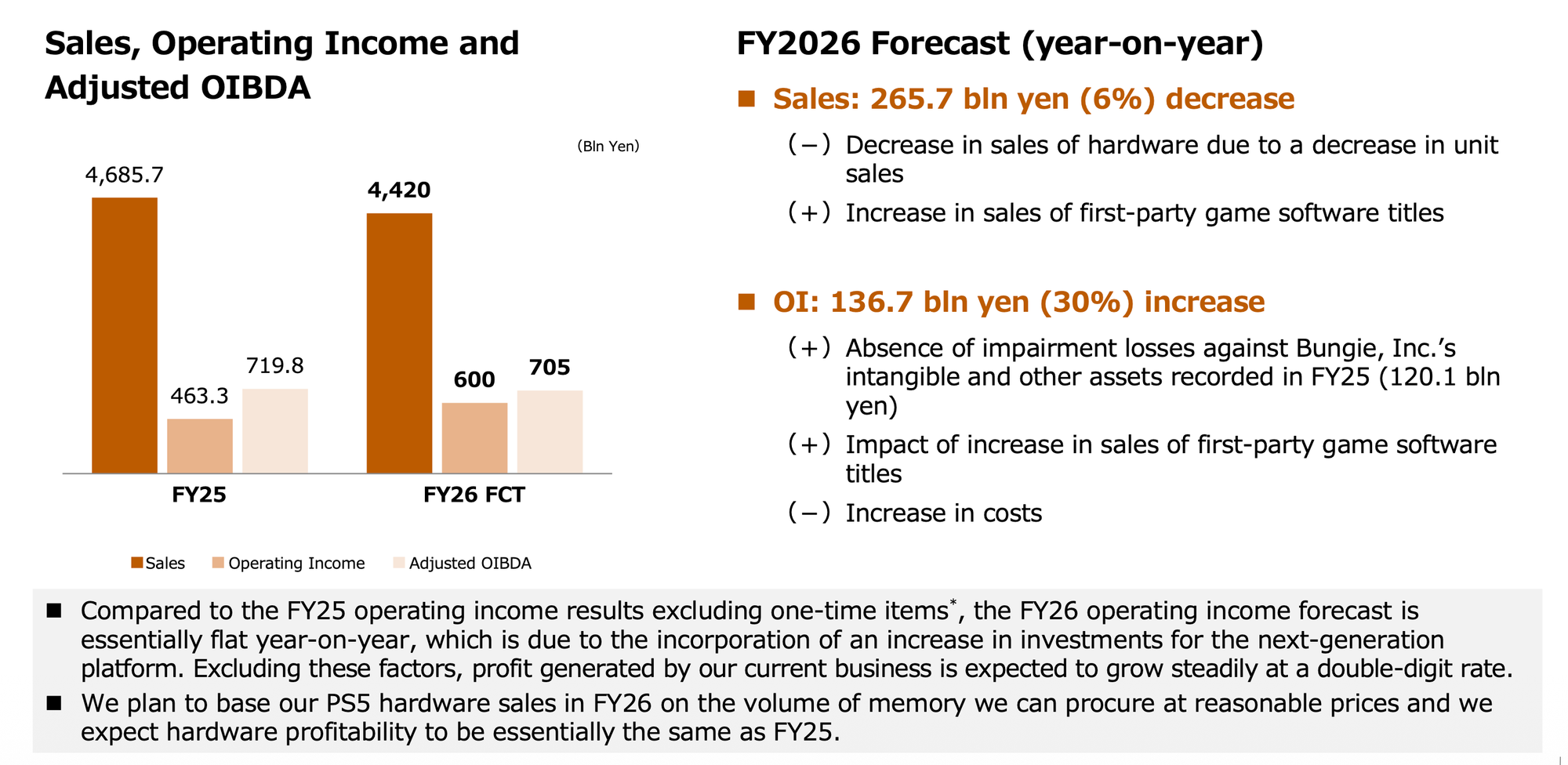
Memory prices are climbing, US tariffs are biting, and the cohort's FY27 guidance reflects it. Nintendo factored roughly ¥100 billion of higher costs into FY27 guidance, citing memory and tariffs directly, and is passing some of those costs through to consumers via a Switch 2 price increase (Japan: ¥49,980 → ¥59,980 in May; US: $449.99 → $499.99 in September). Sony has explicitly limited FY26 PS5 production to the volume of memory it could procure at reasonable prices, baked roughly ¥30 billion of incremental memory cost into its ET&S forecast, and offered no commitment on PS6 timing or pricing – only that the team is "examining potential business model adjustments."
From the software side, Bandai Namco called out tariff impact directly in its Americas region (segment sales -13.0%). Capcom, Konami, Square Enix, and Koei Tecmo all sell into a market where consoles, accessories, and TVs are about to cost more, and that compresses consumer wallet share for everyone. Whatever impacts are felt in hardware will ultimately trickle down to software, leading to overall FY27 guidance that, while still optimistic, is tempered by the reality of memory shortages.
7) Live service and Esports are still a gamble, with winners and losers on both sides
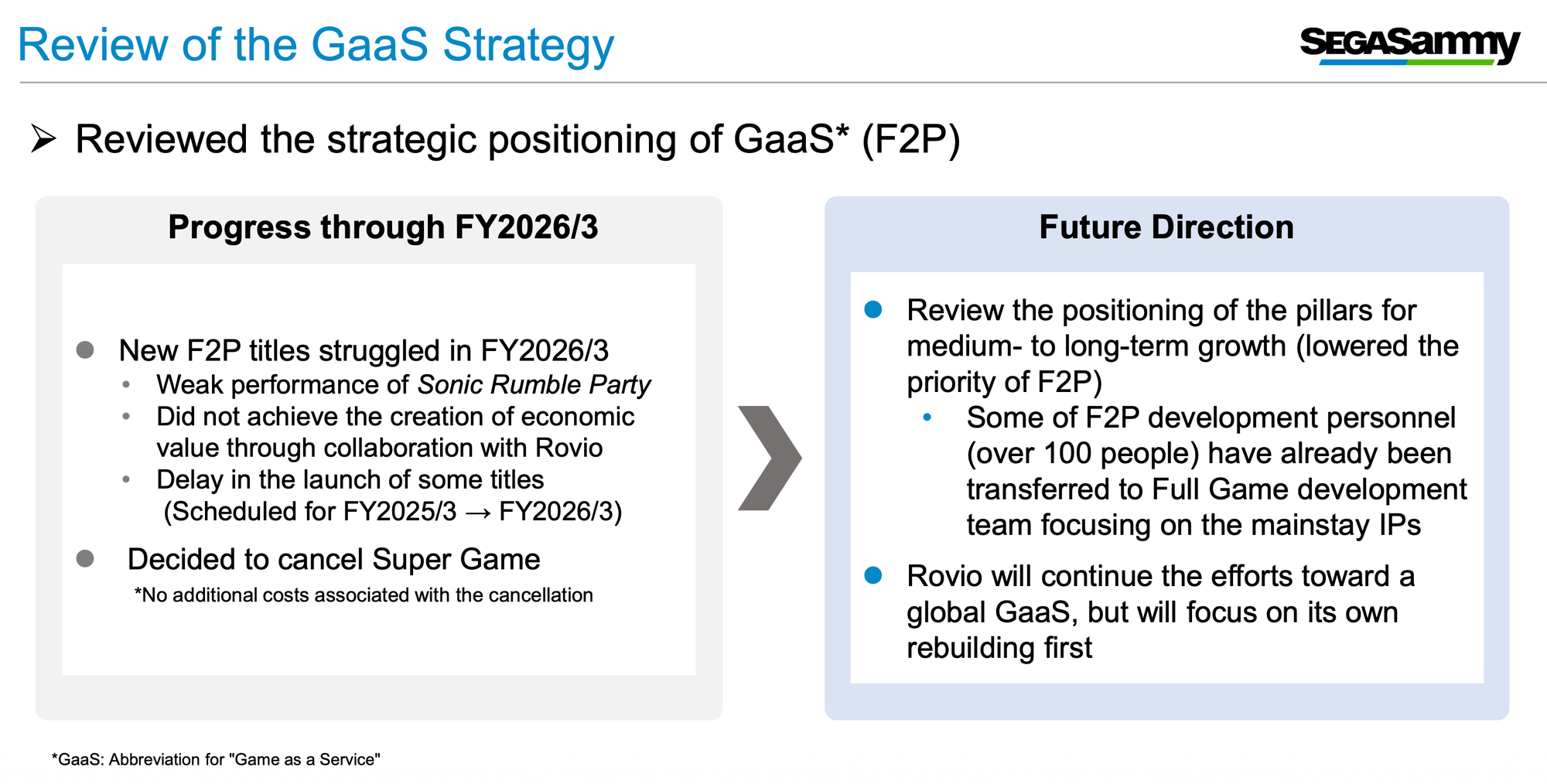
The biggest accounting event of FY26 was Sony's ¥120 billion Bungie impairment, almost a full write-down except for goodwill, as Destiny's audience fell off a cliff, and Marathon struggles to find one. SEGA hit the same wall, with Sonic Rumble Party flagged in its FY26 disclosure as a soft performer, and a planned F2P "Super Game" cancelled, with over one hundred developers reallocated across different projects.
Other publishers, meanwhile, are winning bigger than ever, with esports as the multiplier. Konami's eFootball passed 1 billion cumulative downloads in April 2026, and the FIFAe World Cup 2026 – co-hosted with FIFA – is expanding to a record 110+ countries. Yu-Gi-Oh! Master Duel passed 90 million downloads, with the 2025 World Championship held in Paris and the 2026 edition booked at the Tokyo Garden Theater. Capcom Cup 12 and the Street Fighter League: World Championship 2025 drew 20,000+ in-person attendees, helping push Capcom's Other Businesses segment operating profit up 47%.
Konami's Digital Entertainment segment jumped 38.6% on the back of this exact flywheel – live-service IP feeds the tournaments; the tournaments feed the IP; downloads, engagement, and licensing revenue compound off both.
All told, it was a record year for the Japanese industry. New hardware, transmedia expansion, fresh IP, real-world events – there is a lot to be excited about, and for the full picture, I highly recommend going to the Investor Relations for each of these companies and diving into the earnings for yourself.
If you found value in the above, subscribe to the Lone Relay.