The $68.7 Billion Deal That Missed Its Moment
How the Activision Blizzard purchase by Microsoft closed into a dramatically different technological environment.
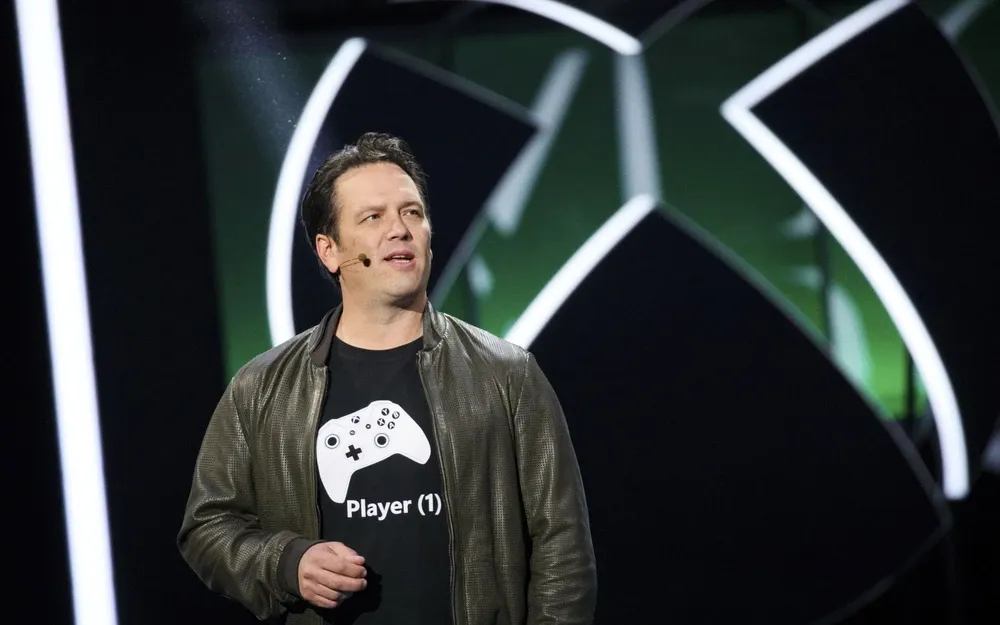
On November 19, 2021, three days after the Wall Street Journal published a devastating exposé alleging that Activision Blizzard CEO Bobby Kotick had concealed years of workplace harassment, Xbox head Phil Spencer picked up the phone to call Kotick. Spencer — who had led Xbox through many acquisitions in recent years, and had even talked about buying Nintendo (for which he was allegedly laughed out of the room) — told Kotick that Microsoft, parent company of Xbox, was interested in a conversation. The next day, Microsoft CEO Satya Nadella made it explicit: Microsoft wanted to buy Activision Blizzard.
The global gaming industry had just posted its best years on record — COVID-era lockdowns had driven worldwide revenue to nearly $180 billion in 2021, up more than 14% year over year. Call of Duty: Warzone had surpassed 100 million players by April 2021, just thirteen months after launch, with the broader franchise counting 150 million MAUs. Candy Crush added another 255 million MAUs and generated $20 billion in lifetime revenues. Activision Blizzard might be politically toxic, but its properties certainly weren’t, and they could be a boon to Xbox’s lineup.
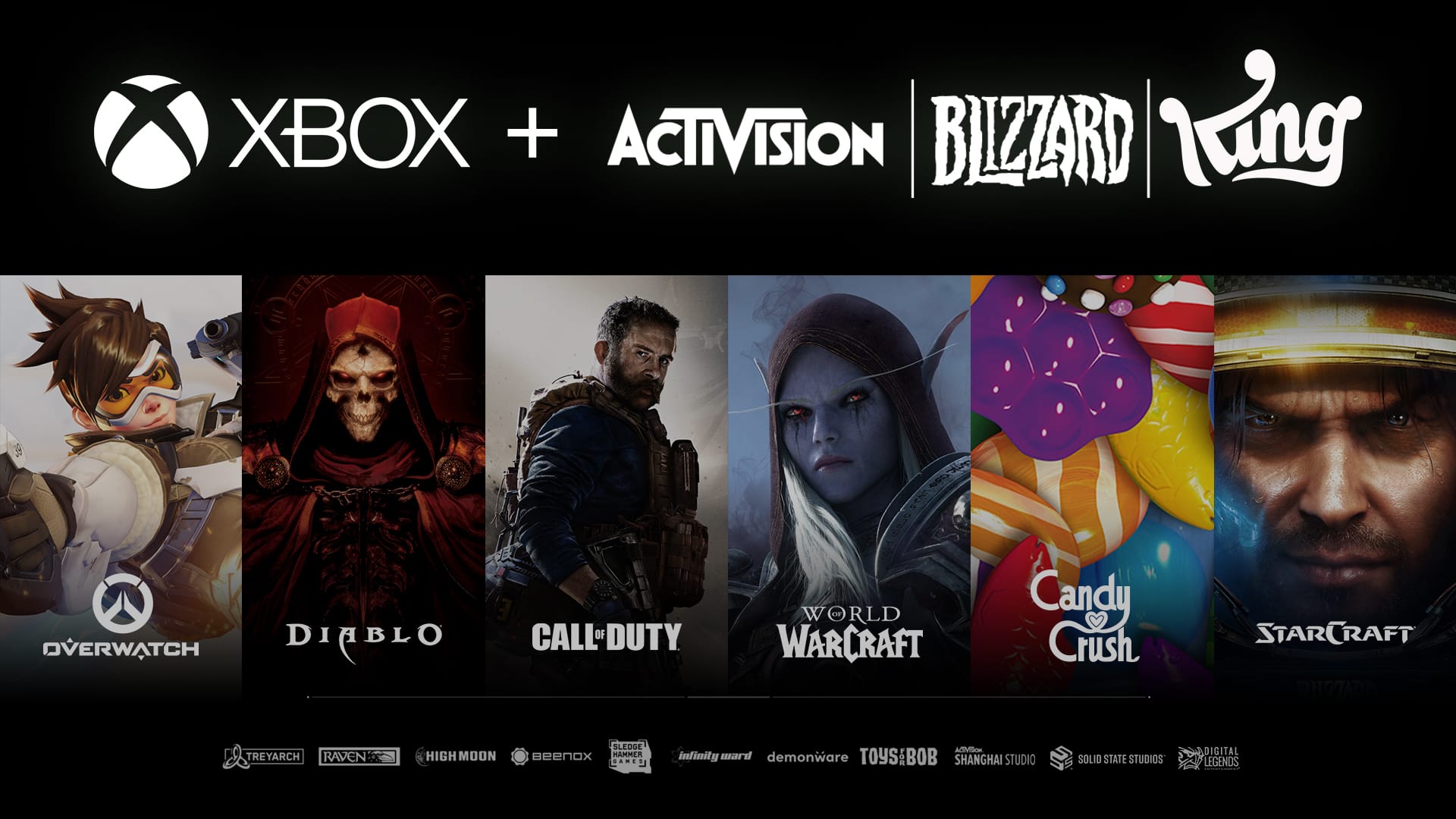
Eight weeks after the call, on January 18, 2022, Microsoft announced the $68.7 billion deal — the largest acquisition in gaming history. The deal would not close until October 2023, after a costly legal battle and series of concessions.
This is not a verdict on whether the deal itself was wise. That debate is well-trodden, and reasonable opinion can be found on both sides. Instead, this is an analysis of timing. Specifically, how the technological landscape transformed in the twenty-one months between announcement and close, and how Microsoft's AI commitments and the Xbox brand have moved in almost perfectly opposite directions since.
In January 2022, eleven days after the Activision deal was announced, OpenAI's board held its first meeting to discuss what would become ChatGPT. In November 2022, with the Activision deal trapped in regulatory limbo with the Federal Trade Commission in the US and the Consumer and Markets Authority in the UK, ChatGPT launched publicly, became the fastest growing app of all time, and ignited a global reorientation of technology capital.
Within months, Amazon had committed $4 billion to Anthropic, Google followed with $2 billion of its own, and a generative AI arms race had broken out across every major platform company. Microsoft’s own response was swift: in January 2023, Nadella committed a reported $10 billion to OpenAI, eventually totaling an estimated $13 billion.
The speed at which Microsoft adopted AI can be traced through capital expenditures. In FY2021, Microsoft spent $20.6 billion in CapEx. By FY2023, as the Activision deal inched toward close, that figure had risen modestly to $28.1 billion. Then the AI infrastructure build began in earnest: $44.5 billion in FY2024 and $64.6 billion in FY2025, with Microsoft committing $80 billion specifically to AI-capable data centers for the fiscal year. S&P Global estimates FY2026 CapEx at $97.7 billion — an annual run rate exceeding $120 billion. The $68.7 billion spent on Activision Blizzard, which once represented more than three times Microsoft's entire annual CapEx budget, now barely exceeds a single quarter of CapEx.
Additionally, Microsoft embedded AI across its entire product line in rapid succession. In February 2023, it launched the new Bing — a ChatGPT-powered overhaul of its search engine — followed by GitHub Copilot X in March. By September 2023, Windows Copilot was announced as a native feature of Windows 11, and two months later, Microsoft 365 Copilot was integrated into Word, Excel, Outlook, and Teams simultaneously.
As this was all happening, the Xbox brand continued the deterioration that largely began following the Xbox One reveal in May 2013. Characterized by always-on internet requirements, used game restrictions, and a mandatory Kinect that priced it $100 above the PlayStation 4, the Xbox One was a dramatic miscalculation that handed Sony a generational head start.
Phil Spencer assumed control of Xbox in 2014, and despite providing a strong frontman for the brand, the first-party pipeline never truly recovered. Halo — once the defining franchise of Xbox — was visibly troubled, culminating in a disastrous gameplay reveal for Halo Infinite in July 2020. Scalebound, a high-profile partnership with PlatinumGames and an opportunity to improve the Xbox brand in Japan, was cancelled after years of development. Crackdown 3 limped out after a five-year development to middling reviews. And while Sony was releasing system-sellers year after year — God of War, Spider-Man, The Last of Us, Ghost of Tsushima, Horizon — Xbox was mired in a first-party content drought that Spencer had difficulty solving organically.
His answer was acquisitions, the most significant move prior to Activision Blizzard being the $8 billion purchase of ZeniMax Media, parent company of Bethesda, in 2021. But buying studios is not the same as running studios, and Xbox had a reputation for poor management of their growing list of properties. The Activision Blizzard deal fell into this same strategy, but at a significantly greater scale, arriving at a moment when Xbox's ability to steward its studios remained an open question.
It helps to understand what Xbox was inside of Microsoft before the deal. In FY2022, gaming revenue totaled $16.2 billion — roughly 8% of Microsoft's $198 billion in total revenue. The $68.7 billion acquisition price represented more than four times Xbox's entire annual revenue, and was many times greater than Activision Blizzard's own standalone revenue of $8.8 billion in 2021. It instantly made gaming Microsoft's most expensive single bet and placed Xbox under a level of corporate scrutiny it had never previously faced. This corporate scrutiny arrived at a terrible time.
Xbox hardware revenue fell 13% in FY2023, grew to a 42% year-over-year collapse in Q4 FY2024, and has continued declining through 2025 and into 2026. Hardware today represents roughly 9% of Microsoft's gaming revenue. Gaming revenue did jump — from $15.5 billion in FY2023 to $21.5 billion in FY2024 — but Microsoft's own earnings disclosures make the source clear: in each quarter following the deal's close, between 44 and 55 percentage points of every reported content and services growth figure was attributed directly to Activision consolidation. Strip Activision out, and the Xbox business was largely flat at best.
Microsoft's response has been less a victory lap, more damage control. In January 2024, it cut 1,900 jobs across Xbox, Activision, and ZeniMax. In May 2024, it shuttered four game studios — including Tango Gameworks, whose Hi-Fi Rush had won critical acclaim months earlier. More layoffs followed in September 2024 and again through 2025.
Then, in February 2026, came the clearest signal of all: Phil Spencer, a 38-year Microsoft veteran who had built his career rising through the ranks at Xbox, retired. Sarah Bond, Xbox president and heir apparent, resigned alongside him. They were replaced by Asha Sharma, head of Microsoft's CoreAI division, who had joined the company from Instacart in 2024.
Microsoft did not install another gaming executive to lead Xbox. It opted for an AI executive.
The truth is that Microsoft bought Activision Blizzard at what looked like an almost perfect moment. Gaming had just come through its most dominant cultural period in history — COVID-era lockdowns had driven player counts to record highs, and the industry was flush with capital and confidence. Activision itself was distressed, its stock depressed and its CEO politically toxic following the WSJ report. The conditions were ideal, so Microsoft made its move.
Those same twenty-one months in regulatory limbo were twenty-one months in which the technological landscape fundamentally changed. Generative AI did not emerge gradually, but reoriented capital markets almost overnight, and immediately branded the Activision deal as a $68.7 billion bet placed on the wrong table at the wrong time. Xbox was already decelerating, AI was just beginning to accelerate, and the gap between those two trajectories widened every quarter the deal sat frozen in court, and has not stopped widening since.
And Microsoft knows it, which has led to the increased oversight of Xbox. You don't replace a gaming CEO with an AI executive because the gaming business is thriving. The Asha Sharma appointment is the company acknowledging that the future of Microsoft runs on Azure and Copilot, not Call of Duty. Activision Blizzard will generate revenue. It may even generate good revenue. But it will do so as a content subsidiary inside a company whose ambitions have moved somewhere else entirely — somewhere that $68.7 billion, had the timing been different, might have helped build faster.